Airbnb coming closer to a one-stop shop for travel by buying HotelTonight. Fortune Magazine video above published Mar 7, 2019.
Airbnb says it’s been profitable for two years straight, in preparation for an initial public offering (IPO) of shares. Airbnb is one of several unicornsreportedly preparing to IPO, including Uber, Lyft and WeWork. But Airbnb's IPO may not actually debut this year due to the HotelTonight acquisition.
Domains:airbnb.com and hoteltonight.com Airbnb, Inc. is a privately held global company headquartered in San Francisco that operates an online marketplace and hospitality service accessible via its websites and mobile apps. Members can use the service to arrange or offer lodging, primarily homestays, or tourism experiences.
Airbnb CEO: Brian Chesky (Aug 2008–)
Revenue: 2.6 billion USD (2017)
Number of employees: 3,100 (2017)
Founders: Brian Chesky, Nathan Blecharczyk, Joe Gebbia
Video above published Dec 15, 2016: Zeitguide founder and CEO Brad Grossman lays out the challenges ahead for platform-based companies such as Airbnb.com.
Terrorism - "There is a high threat from terrorism in Morocco."
"Attacks could be indiscriminate, including in places visited by foreigners. In April 2011, 17 people were killed and 25 injured in a large explosion in Marrakech at the Argana Restaurant in Djema el-Fna Square. Protective security measures are in place at many Moroccan hotels and sites popular with tourists. Security measures, including security personnel, may be visible in certain areas.The Moroccan authorities have warned of an increased threat linked to the growing number of Moroccans sympathetic or belonging to international terrorist organisations operating in Syria, Iraq and Libya, and regularly report the disruption of terrorist cells. There is considered to be a heightened threat of terrorist attack globally against UK interests and British nationals, from groups or individuals motivated by the conflict in Iraq and Syria. You should be vigilant at this time." source: UK government (emphasis added)--see further below more warnings from governments, including Canada, Australia, New Zealand, U.S.
*But note ICANN's response dated January 27, 2016: Safety and Security at ICANN Meetings - Jan 27, 2016 - ICANN: "... regarding ICANN55 specifically, we are in constant and on-going communication with our hosts and the Moroccan government, to assess any security concerns surrounding the upcoming meeting. In addition, we are working with a highly respected global security-consulting firm, which gives us on-going updates of potential risks. This firm has also assigned a senior level analyst to work with ICANN. As of this date, the assessments of these various security experts is that there is only a LOW risk of any type of terrorist activity in Morocco ... here are just a few [security measures] we will beinstituting for the first time in Marrakech ...
Every delegate will now need a government-issued ID to pick up a badge at the registration desk.
There will be increased security screening for those entering our meeting venue, which may include metal detectors, magnetic wands and bag checks.
There will be advanced verification of delegate registration information by Moroccan authorities.
Security will be increased at the hotels where delegates are staying.
We are establishing a 24/7 operations center at the venue..." (emphasis added)
UPDATES:
Ex-Guantanamo detainee allegedly led recruiting cell for the Islamic State #ISIS | The Long War JournalFebruary 29, 2016: "... According to the brief biography in JTF-GTMO’s assessment, which appears to be largely based on Ahmed’s own account while in custody, Ahmed and his brothers were selling drugs in the 1990s when he “became involved in the Jamaat Tablighi” and “traveled to Morocco at the invitation of an extremist recruiter.” Jamaat Tablighi is an Islamic proselytization group that JTF-GTMO found was frequently used as a cover for jihadists traveling around the globe. While in Morocco, Ahmed became interested in the jihad in Chechnya. He was allegedly “recruited by a man named ‘Naiz’ and the pair traveled to the United Kingdom (UK).” Naiz paid for Ahmed’s trip. “After arriving in the UK in May 2001,” according to the JTF-GTMO file, Ahmed “started worshipping at the Nor mosque in London,” supplementing “the income he received from his brother by selling drugs at a disco where he worked”..." Tablighi Jamaat - (Wikipedia): "In France, as many as "80% percent of the Islamist extremists" have come from Tablighi ranks ..."
UPDATE: ‘Real armed commando’: Police bust ISIS terror cell preparing ‘chemical attack’ in Morocco — RT News20 Feb 2016 (video and photos at link) and also: Today 24: (Feb 20, 2016) "... The source added that among the plans that this cell intended to implement, attack tourist structures, especially hotel establishments, including the "Sofitel" and "City" in Essaouira, the killing of Western tourists in Essaouira, and prominent personalities public civilian and military, attacking military barracks and, in particular, Meknes and Marrakesh in order to acquire firearms..." UPDATE 19 Feb 2016: ISIS plans series of terror attacks in Morocco: official - Cihan: Feb 19, 2016 - "A top Moroccan intelligence official said Friday that the Islamic State (ISIS) planned a series of terror attacks in Morocco, including a suicide car bomb attack..." See also: ISIS Terrorist Cell Dismantled in Morocco 'Planned to Use Biological Weapons' (Feb 19, 2016) UPDATE 18 Feb 2016: Report Says Morocco security services foiled “dangerous” ISIS (Islamic State affiliate) terrorist attacks and arrested 10 suspects, including a French national, on Thursday. "The members of the cell were arrested with a large stock of weapons that they were planning to use to “carry out large-scale guerrilla-style warfare” in the Kingdom, according to the release" (read more at link above). UPDATE 3 Feb 2016: Morocco: a new terrorist cell dismantled in Marrakech - Afrik.com: "A new alleged terrorist cell was dismantled on Tuesday by the Central Bureau of Judicial Investigations (BCIJ). Its members were active in Marrakech, Laayoune and Boujdour ..." (read more at link above) UPDATE 1 Feb 2016: according to a report in Middle East Eye, updated Jan 29, 2016, many of the ISIS fighters in Libya are Tunisians, Moroccans, Algerians, Nigerians and Sudanese. “Many of them have also return from the war in Syria, and they are well organised and prepared for everything. And from our interrogations with prisoners, we assume that the next targets will be Morocco and Algeria...” see also #InsideMorocco | Middle East Eye
UPDATEReport (Jan 25, 2016) Morocco reportedly will join US-led coalition against ISIS in Libya.
UPDATE ISIS sets sights on overthrowing governments of Morocco and Tunisia - Middle East - Jerusalem Post 01/21/2016: "Amid civil unrest in Tunisia and Morocco, ISIS calls on Muslims to attack both states and oust their 'apostate' democratic governments. In the wake of growing civil unrest in Tunisia and Morocco, ISIS has launched a new media campaign directed at Muslims in the Islamic Maghreb, which focuses mainly on the 'apostate' governments of Tunisia and Morocco.The campaign, launched on Thursday, consists of several videos released by different ISIS provinces. The jihadists participating in the campaign call on Muslims to join ISIS strongholds in Tunisia, Libya, Mali and Algeria in order to oust the apostate democratic governments of Tunisia and Morocco and replace them with an Islamic regime based on Sharia law..."
UPDATE 19 Jan 2016: Paris attackers linked in Morocco arrest - BBC News: "The man was detained near Casablanca on Friday, the interior ministry said, and had travelled from Syria via Turkey, Germany, Belgium and the Netherlands. He had fought in Syria with al-Nusra front before joining so-called Islamic State, Morocco said. The Paris attacks of 13 November [2015] killed 130 people..."(read more at link above) UPDATE 18 Jan 2016: Why did Burkina Faso become al-Qaida's latest target? | World news | The Guardian: "In a statement released online, the group said that the attack was “a new message from the heroic champions of Islam, with their blood and their bodies, to the slaves of the cross, the occupiers of our homes, the looters of our wealth, and who would undermine our security.” But putting hyperbole and propaganda aside, what message is AQIM looking to send - and for whom is it intended? First, it is a message to rival jihadist groups, particularly Islamic State (ISIS), that AQIM is once again a force to be reckoned with..." read more at link above and AQIM takes Australian couple hostage in northern Burkina Faso | The Long War Journal.
UPDATE: Profile: Al-Qaeda in North Africa - BBC News: "... Morocco's security forces clamped down on several militant cells - arresting, trying and jailing their leaders - after four incidents blamed on al-Qaeda-inspired groups in 2007. The security forces were said to be on the lookout for militants who were believed to be crossing into Morocco from Algeria. And of course the Madrid train bombs, which killed almost 200 people in 2004, were the work of a Moroccan gang ..."
Attackers raided a luxury hotel in Burkina Faso overnight, opening fire and seizing hostages in an hours-long siege that ended with at least 23 people dead. Video above published Jan 16, 2016.
Map showing location of Paris, France, and Burkina Faso in relationship to Marrakech, Morocco, ICANN55 venue
(source: Google Earth Map)
UPDATE 16 Jan 2016 - BBC: "At least 23 people of 18 different nationalities are now known to have died after Islamist militants attacked a luxury hotel in Burkina Faso [in west Africa]. ... A recently consolidated [Al-Qaeda in the Islamic Maghreb] ... is keen to cement its status as the dominant jihadist group in North Africa and the Sahel, particularly with the rise of its rival, the so-called Islamic State, in the region."
The Maghreb, or the Greater Maghreb, is usually defined as much or most of the region
(including Marrakech, Morocco) of western North Africa, west of Egypt. Wikipedia
Going to Marrakech (a/k/a Marrakesh), Morocco, for the ICANN 55 meeting, March 5-10, 2016?
Better take heed of official travel warnings and advisories issued by governments (see below, emphasis added), because you won't find any mention* of these dangers on the official ICANN 55 website:
We advise you to exercise a high degree of caution in Morocco because of thethreat of terrorist attacks. You should pay close attention to your personal security at all times. Monitor the media and other sources about possible new security risks.
The Moroccan authorities have warned of an increased threat linked to the number of Moroccans belonging to international terrorist organisations operating in Syria and Iraq. Terrorist attacks have occurred in Morocco in places frequented by tourists in the past. See Safety and security.
There is a general threat of kidnapping against Westerners in North Africa. You should maintain a high level of vigilance at all times and especially when travelling in southern and border areas of Morocco.
You should monitor the media for reports of protest activity and avoid large gatherings and demonstrations as they may turn violent. Exercise particular caution on weekends, including in the period surrounding Friday prayers.
We strongly advise you not to travel to the Western Sahara because of the risk posed by landmines. Permission from Moroccan authorities is required before travelling to Western Sahara.
Australia does not have an embassy or consulate in Morocco. The Canadian Embassy located in Rabat, provides consular assistance to Australians in Morocco. This service includes the issuance of Provisional Travel Documents. The Australian Embassy in Paris can also assist Australians in Morocco...." (emphasis added)
Government of Canada travel advice and advisories for Morocco: "MOROCCO - Exercise a high degree of caution There is no nationwide advisory in effect for Morocco. However, you should exercise a high degree of caution due to the threat of terrorism in the region."
U.S. Department of State: "... The potential for terrorist violence against U.S. interests and citizens exists in Morocco. Moroccan authorities continue to disrupt groups seeking to attack U.S. or Western-affiliated and Moroccan government targets, arresting numerous individuals associated with international terrorist groups. With indications that such groups still seek to carry out attacks in Morocco, it is important for U.S. citizens to be keenly aware of their surroundings and adhere to prudent security practices such as avoiding predictable travel patterns and maintaining a low profile. Establishments that are readily identifiable with the United States are potential targets for attacks. These may include facilities where U.S. citizens and other foreigners congregate, including clubs, restaurants, places of worship, schools, hotels, movie theaters, U.S. brand establishments, and other public areas. Such targets may also include establishments where activities occur that may offend religious sensitivities, such as casinos or places where alcoholic beverages are sold or consumed ..."
UK Government: "... Morocco is a Muslim country which follows Islamic laws and customs. You should respect these at all times. See Local Laws and Customs. There is a high threat from terrorism in Morocco. See Terrorism ..."
Recent news headlines: Europe turns to Morocco in Paris attacks investigation
Reuters Morocco provided the tip-off that enabled French police to locate Abaaoud ... He returned to Morocco from France ... Morocco has stepped up its tracking of militant cells since Islamist attackers killed 17 people in Marrakesh in 2011 ...
On September 28, 2015, the ICANN Board approved renewal of the .TRAVEL, .CAT, and .PRO Registry Agreements with Specification 7, Rights Protection Mechanisms, included, which means the Uniform Rapid Suspension system (“URS”) adopted by ICANN for new gTLDs is now applicable to all three of these "legacy" gTLDs (generic top-level domains). This issue had caused some controversy as it was applying new gTLDs' policy to legacy gTLDs without going through a Policy Development Process (PDP). The ICANN Board's analysis and reasoning in approving the inclusion of the URS for these three legacy gTLDs stated that this does not set a precedent for other legacy gTLDs (e.g., .COM, .NET, .ORG):
"[This] is not a move to make the URS mandatory for any legacy TLDs, and it would be inappropriate to do so. In the case of .TRAVEL, [.CAT and .PRO] inclusion of the URS was developed as part of the proposal in bilateral negotiations between the Registry Operator and ICANN." (excerpt from ICANN Board Resolution, emphasis added)
The full analysis and reasoning of the Board:
"The Board carefully considered the public comments received for Renewal Registry Agreement, along with the summary and analysis of those comments. The Board also considered the terms agreed to by the Registry Operator as part of the bilateral negotiations with ICANN. While the Board acknowledges the concerns expressed by some community members regarding the inclusion of the URS in the Renewal Registry Agreement, the Board notes that the inclusion of the URS in the Renewal Registry Agreement is based on the bilateral negotiations between ICANN and the Registry Operator, where Registry Operator expressed their interest to renew their registry agreement based on the new gTLD Registry Agreement. "The Board notes that the URS was recommended by the Implementation Recommendation Team (IRT) as a mandatory rights protection mechanism (RPM) for all new gTLDs. The GNSO was asked to provide its view on whether certain proposed rights protection mechanisms (which included the URS) were consistent with the GNSO's proposed policy on the introduction of New gTLDs and were the appropriate and effective option for achieving the GNSO's stated principles and objectives. The STI considered this matter and concluded that "Use of the URS should be a required RPM for all New gTLDs." That is, the GNSO stated that the URS was not inconsistent with any of its existing policy recommendations. "Although the URS was developed and refined through the process described here, including public review and discussion in the GNSO, it has not been adopted as a consensus policy and ICANN has no ability to make it mandatory for any TLDs other than new gTLD applicants who applied during the 2012 New gTLD round. "Accordingly, the Board's approval of the Renewal Registry Agreement is not a move to make the URS mandatory for any legacy TLDs, and it would be inappropriate to do so. In the case of .TRAVEL [.CAT and .PRO], inclusion of the URS was developed as part of the proposal in bilateral negotiations between the Registry Operator and ICANN. "Additionally, the Board considered the comments regarding transitioning legacy gTLDs to the new form of the registry agreement. The Board notes that existing registry agreement calls for presumptive renewal of the agreement at its expiration so long as certain requirements are met. The renewal agreement is subject to the negotiation of renewal terms reasonably acceptable to ICANN and the Registry Operator. The renewal terms approved by the Board are the result of the bilateral negotiations called for in the current registry agreement, and transitioning to the new form of the registry agreement would not violate established GNSO policy. As described below, the new form of the registry agreement provides some operational advantages, in addition to benefits to registrants and the Internet community including public interest commitments, requiring the use of registrars under the 2013 RAA, and the ability for ICANN to designate an emergency interim registry operator in the event that emergency thresholds for critical registry services is reached." (emphasis added)
Domain Mondo and its Editor thank the ICANN Board of Directors for their careful review and consideration of all public comments, and specifically thank the Board for stating its approval of the three Renewal Registry Agreements is "not a move to make the URS mandatory for any legacy TLDs, and it would be inappropriate to do so," and further stating: it [URS] "has not been adopted as a consensus policy and ICANN has no ability to make it mandatory for any TLDs other than new gTLD applicants who applied during the 2012 New gTLD round."
Cuba: Carnival's Next Destination Spot--Carnival Corporation, seeking to be the first U.S. cruise operator to call on Cuba in 50 years, said the U.S. Treasury and Commerce departments approved its request to begin sailing there. Company CEO Arnold Donald speaks on “Bloomberg Markets,” July 7th--the Company is awaiting approval from Cuban authorities.
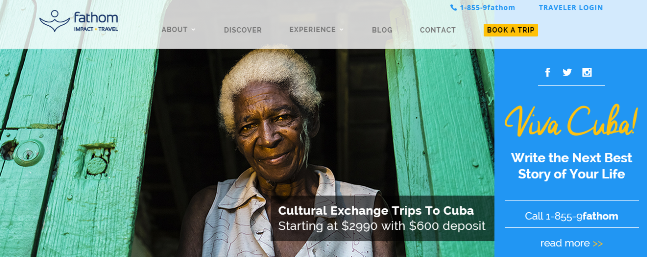
Carnival Corporation Granted U.S. Approval for Travel to Cuba-- full-week immersion sailings to Cuba planned beginning in the spring of 2016--bookings may be reserved on Carnival's fathom.org website--Prices for seven-day itineraries to Cuba start at $2,990 per person, excluding taxes, port and other government and related fees, and including all meals on the ship, onboard social impact immersion experiences and certain on-the-ground cultural immersion activities, says the Company. Carnival, the world's largest travel and leisure company has been granted U.S. licenses to operate direct U.S. to Cuba travel for the purpose of providing cultural exchanges. The company intends for fathom (fathom.org), its new purpose-travel brand, to begin full-week sailings to Cuba, beginning in May 2016, in addition to fathom's full-week sailings to the Dominican Republic. (See press release below)
The Obama Administration's re-establishing a US-Cuba relationship will have wide ranging opportunities for both Americans and Cubans. Among others, Google representatives have visited Cuba within the past year.
UPDATE: *Note that domain name fathom.com is registered by Columbia University, New York City. Message at Fathom.com"no longer available: The educational resources formerly available at fathom.com are no longer being maintained and have been taken offline. The fathom.com domain is not available for sale. All other inquiries should be directed to the Center for Digital Research and Scholarship at Columbia University (info@cdrs.columbia.edu)." The domain namefathom.net is also registered (to a different entity) and the website active.
The ccTLD for Cuba is .cu -- currently the website (nic.cu) of the Registry operator for .cu reads:
CUBANIC - RULES:> 2. Application and award (google translation) 2.1. Only course will be given to the application for a declaration of a domain name when the same is not found previously requested or granted under the same category as requested. 2.2. Any national or foreign legal person may apply to CUBANIC granting a domain name second level under .cu or subdomains under the generic categories of second level he managed. 2.3. A legal person may request the granting of multiple domain names as long as this objective has not monopolistic practices, speculation or unfair competition. 2.4. CUBANIC not issue domain names to individuals. see also: http://www.iana.org/domains/root/db/cu.html
Press Release from Carnival Corporation:
MIAMI, July 7, 2015 -- Carnival Corporation & plc[NYSE/LSE: NYSE: CCL; NYSE: CUK], the world's largest travel and leisure company, today announced that the U.S. Department of the Treasury and the U.S. Department of Commerce granted approval for the company to begin travel to Cuba.Carnival Corporation intends to take travelers to Cuba beginning in May 2016 via its newly launched fathom brand – a new social impact travel brand providing purpose-oriented, social impact experiences, initially in the Dominican Republic.
Carnival Corporation intends to operate fathom travel itineraries directly to Cuba for the purpose of providing cultural, artistic, faith-based and humanitarian exchanges between American and Cuban citizens. Authorized under current U.S.-to-Cuba travel guidelines, the new Cuban itineraries on fathom will strictly comply with U.S. Department of Treasury rules that allow licensed travel companies to transport approved travelers to Cuba to engage in activities that support the Cuban people. Carnival Corporation is in active discussions and plans to work with the appropriate authorities inCuba so that Cuban approval is granted.
Launched June 4th as Carnival Corporation's 10th global brand, fathom is designed as a purpose-driven brand to enrich the lives of its travelers and in the case of the Dominican Republic, drive sustainable social impact on a significant scale. The brand expects to attract 37,000 annual travelers who collectively could spend a total of more than 100,000 days a year either volunteering or immersing in educational and cultural exchanges in local communities.
Beginning in April 2016, fathom will embark on weekly seven-day voyages from Port Miami aboard the MV Adonia, a 710-passenger vessel redeployed from Carnival Corporation's P&O Cruises (UK) brand. fathom's first impact destination will be the northern region of the Dominican Republic, whereCarnival Corporation's new port of call, Amber Cove, will serve as home base.
Following the inaugural April month of voyages to the Dominican Republic, fathom intends to offer both Dominican and Cuban itineraries on a systematic and regular basis, giving travelers the opportunity to choose from two destinations and a range of activities from social impact in the Dominican Republic and educational and cultural exchanges in both countries designed to have a positive, transformative effect on the lives of the travelers.
"We are excited about receiving U.S. approval as the very important first step to ultimately take travelers to Cuba under the existing 12 criteria for authorized travel. We look forward to working with the Cuban authorities for their approval to help make the social, cultural and humanitarian exchanges between U.S. citizens and the people of Cuba a reality," said Arnold Donald, President and CEO of Carnival Corporation. "We know there is strong demand from travelers who want to immerse themselves in Cuban culture, so this is a historic opportunity for us to enable more people to experience Cuban society. It is also an important opportunity for our new fathom brand to expand its positive influence in the world with this potential to add full-week immersion sailings to Cuba to its already planned full-week social-impact itineraries to the Dominican Republic beginning in the spring of 2016."
Tara Russell, president of fathom and global impact lead for Carnival Corporation, added: "We're incredibly excited and humbled by this potential opportunity to help travelers experience the amazing beauty and culture of Cuba, while being able to provide educational and cultural exchange activities that will benefit both the traveler and the Cuban people. After establishing the Dominican Republic as our first partner destination, Cubarepresents an important step for us to expand our ability to offer meaningful and enriching experiences to purpose-driven travelers. Our goal remains the same for both destinations – to enable travelers to immerse, learn, serve and flourish while making enduring, sustainable contributions on a scalable and systematic basis. We are looking forward to building what we intend to be a beautiful and lasting friendship with the Cuban people."
Led by Russell's strong background in social entrepreneurship, fathom seeks to develop lasting social impact partnerships that allow for meaningful personal enrichment of the traveler, while providing systematic, long-term educational, environmental and economic development benefits in its partner countries.
"We're very interested in exploring the prospects of expanding our partnership with fathom to include Cuba, building new impact programs and lending our assistance to strengthen existing initiatives that will help educational, cultural and humanitarian efforts already going on in Cuba," said David Luther, founder and executive director of IDDI, a non-profit organization with the mission to help alleviate poverty in rural and urban areas in the Caribbean. "IDDI has long-standing relationships in Cuba and more than a decade of experience working on the ground side-by-side with local officials to make a positive impact in Cuban communities. Nothing else like fathom exists to bring hundreds of like-minded travelers a week to communities of people who need ongoing support. With fathom and its travelers, the potential for making a lasting impact in people's lives is tremendous. We look forward to partnering closely with fathom to take our programs to the next level, and support growth and prosperity for the citizens of Cuba."
Travelers may reserve travel on future fathom voyages
Prices for the seven-day trip to the Dominican Republic start at $1,540 per person, which includes an exterior cabin with a view, all meals on the ship, onboard social impact immersion experiences, three on-shore social impact activities and related supplies, taxes, fees, and port expenses. Prices will vary by season.
Prices for seven-day itineraries to Cuba start at $2,990 per person, excluding taxes, port and other government and related fees, and including all meals on the ship, onboard social impact immersion experiences and certain on-the-ground cultural immersion activities.
Going to Buenos Aires for ICANN 53 (June 21-25, 2015)? Domain Mondo strongly reccommends you review and bookmark the US Department of State web pages below [travelers to ICANN 53 from other nations should also review their own national government sources and this ICANN page]:
TOURIST VISA not required for stays of 90 days or less. However, prior to arrival in Argentina, U.S. citizen tourist and business travelers must pay a $160 reciprocity fee. [NOTE: Citizens from countries that have to pay a Reciprocity Fee must pay it in their own country. Payment on Argentinean airports is no longer available.]
Argentine law requires that, prior to arrival in Argentina at any entry point, U.S. citizen tourist and business travelers pay a 160 USD reciprocity fee by credit card online at the Provincia Pagos website. For English instructions, check Online Payment brocuhure. Once paid, travelers must print out the receipt and present it to the Argentine immigration officer at the time of entry. The fee is valid for 10 years from the date of payment and for multiple entries. It is advisable to keep multiple copies of the receipt, as it must be presented every time you enter Argentina. The fee applies only to bearers of tourist passports. Travelers bearing diplomatic or official passports are required to get visas prior to arrival in Argentina but are not charged the reciprocity fee, nor are travelers transiting and not entering Argentina.
WOMEN TRAVELER INFORMATION ... travel tips for Women Travelers.
SAFETY and SECURITY: ... in Buenos Aires, where violent robberies have been occurring with increasing frequency. While crime can occur at all times of day, tourists who go to La Boca should limit their visits to the designated tourist street during daylight hours only... A number of scams involving yellow and black taxis have been reported at international airports and around Buenos Aires. The most frequently reported scams include a “handler” at the airport requesting hundreds of pesos (an amount that far exceeds the likely fare) from the traveler as s/he gets into the cab. The traveler assumes s/he is paying a flat rate up front. When the cab ride is finished, the driver demands the ride fare stating to have no association with the handler at the airport and that the fee paid was to get placed in the cab. Another version of the scam involves the taxi breaking down on the side of the freeway and another cab coming to retrieve the passenger. The first driver demands payment for the whole fare to the destination, as does the second driver who completes the trip. To avoid these potential issues, either pre-arrange transportation or select one of the flat rate “remise” services located inside the airport terminal. In town, radio taxis from a reliable location, such as a hotel, should be utilized whenever possible. After dark, radio taxis or private “remise” taxis should be called from a reliable location. Criminals usually work in groups, and travelers should assume criminals are armed. Criminals employ a variety of ruses to distract and victimize unsuspecting visitors. Be suspicious of anyone who approaches you on the street. A common scam is to spray mustard or another substance on the tourist from a distance. A pickpocket will then approach the tourist offering to help clean the stain, and while doing so, s/he or an accomplice robs the victim. Another scam is to entice tourists into a bar known as a “wiskeria” with a flyer for a shopping discount or free show. Once inside, the victim is not allowed to leave until s/he pays an exorbitant amount for a drink. In other scenarios, criminals use the excuse of handing out the flyers to approach victims and rob them. Thieves on foot and motorcycles, “motochorros,” regularly nab purses, backpacks, laptops, and luggage, and criminals will often distract visitors for a few seconds to steal valuables. If traveling in a car, keep windows up and valuables in the trunk or on the floor boards. Do not place handbags on the back of your chair or on the floor at a restaurant; instead, keep them in your lap. While most U.S. citizens are not physically injured when robbed, criminals may be armed and are known to use force when they encounter resistance. There have been violent and even fatal attacks on foreigners carrying valuables such as expensive cameras and equipment. Visitors are advised to immediately hand over all cash and valuables if confronted. Thieves may target visitors wearing expensive watches or jewelry, or carrying laptop computer cases. When staying in a hotel or apartment, it is a good precaution to call the front desk or security to identify uninvited individuals before giving them access. There have been a small number of reports of the use of date rape drugs in bars. Travelers should use caution entering and exiting financial institutions and when using ATM machines. Thieves have been known to target persons coming in and out of these locations. Some travelers have received counterfeit currency in Argentina. Unscrupulous vendors and taxi drivers sometimes pretend to help tourists review their pesos and then trade bad bills for good ones. Characteristics of good currency can be reviewed at the Argentine Central Bank website.
Along with conventional muggings, "express kidnappings" occur. Victims are grabbed off of the street or stopped in mobile vehicle road blocks based on their appearance and vulnerability. In some scenarios, they are forced to withdraw as much money as possible from ATM machines, and then their family or co-workers are contacted and told to deliver all the cash that they have on hand or can gather in a couple of hours. Once the ransom is paid, the victim is usually quickly released unharmed. There have been some foreign victims of express kidnappings. Visitors are particularly advised not to let children and adolescents travel alone. Virtual kidnappings (fake telephone kidnappings) are common. Criminals use stolen phones or otherwise obtained personal data to contact family members and co-workers claiming to have kidnapped the owner of the phone. This has happened while the alleged kidnapping victim is in the movie theater, on an international flight, or when a cell phone has just been stolen. Memorizing important phone numbers and if robbed immediately finding a phone and letting family members know you are alright are critical to interrupting this cycle.
Travelers worldwide are advised to avoid packing valuables in their checked baggage. In Argentina, officials have publicly acknowledged the systematic theft of valuables and money from checked baggage at Buenos Aires airports. Travelers should exercise continued care and caution....
Your passport is a valuable document and should be guarded. Passports and other valuables should be locked in a hotel safe, and a photocopy of your passport should be carried for identification purposes. The U.S. Embassy has observed an increase in reports of stolen passports.
VICTIMS OF CRIME: Countrywide - To report emergencies, contact the police, an ambulance, or the fire department by dialing 911 from any phone except in Cordoba, Mendoza, Iguazu, Tucuman, and Tierra del Fuego provinces, in which you need to dial 101 for emergency services.
If you or someone you know becomes the victim of a crime abroad, you should contact the local police and the nearest U.S. embassy or consulate [see below]....
The Argentine Federal Police have established a Tourist Police Unit to receive complaints and investigate crimes against tourists. The unit, located at Corrientes 436 in Buenos Aires, responds to calls around the clock at 4346-5748 or toll-free 0800-999-5000 from anywhere in the country....
... Demonstrations are common in metropolitan Buenos Aires ... Protesters on occasion block streets, highways, and major intersections, causing traffic jams and delaying travel. While demonstrations are usually nonviolent, some individuals break from larger groups and sometimes seek confrontation with the police and vandalize private property. Groups occasionally protest in front of the U.S. Embassy and U.S.-affiliated businesses. U.S. citizens should take common-sense precautions and avoid gatherings or any other event where crowds congregate to protest....
Currency: ... banks and exchange houses in Argentina reportedly have been refusing to sell dollars and other foreign currencies to foreign citizens in exchange for pesos unless the foreign traveler is able to present original receipt(s) showing the purchase of pesos. ...
Health: ...Most travelers to Argentina need to have only their routine U.S. recommended immunizations updated. The one additional recommended vaccine for all travelers is Hepatitis A...
TRAFFIC SAFETY AND ROAD CONDITIONS: While in Argentina, you may encounter road conditions that differ significantly from those in the United States. Driving in Argentina is generally more dangerous than driving in the United States. By comparison, drivers in Argentina tend to be aggressive, especially in Buenos Aires, and often ignore traffic regulations. An Argentine or international driving permit is required to drive in Argentina, but please verify with local authorities for the most current information...
CRIMINAL PENALTIES: While you are traveling in Argentina, you are subject to its laws even if you are a U.S. citizen. Foreign laws and legal systems can be vastly different than our own. In some places you may be taken in for questioning if you don’t have your passport with you. In some areas, it is illegal to take pictures of certain buildings. Driving under the influence could land you immediately in jail....