Showing posts with label Community. Show all posts

2018-08-14

Coworking Space Startup WeWork and Asia's Coworking Boom (video)

Asia's coworking boom: 'We're still in the starting out phase'

CNBC Life video above published Aug 9, 2018: Turochas Fuad, WeWork managing director for Southeast Asia, talks about the coworking space start-up's expansion plans in the region.

WeWork is a U.S.-headquartered company that provides shared workspaces, technology startup subculture communities, and services for entrepreneurs, freelancers, startups, small businesses and large enterprises.
  • Founded: 2010, SoHo, Manhattan, New York City, NY
  • Founders: Adam Neumann, Miguel McKelvey
  • Headquarters: New York City, NY
  • Domain: wework.com


feedback & comments via twitter @DomainMondo


DISCLAIMER

2016-09-22

Women Techmakers Mountain View Summit 2016 (video)

Women Techmakers Mountain View Summit 2016:

Experience the highlights of the 3rd annual Women Techmakers Summit in Mountain View. Women Techmakers provides visibility, community, and resources for women in technology across all phases of their careers, and empowers a global community, year round. Video above published September 20, 2016. Playlist of all Women Techmakers Summit videos here.

You can learn more about Women Techmakers at WomenTechmakers.com and on twitter:


feedback & comments via twitter @DomainMondo


DISCLAIMER

2016-03-20

News Review: ICANN, IANA, NTIA, Congress, the American People

DomainMondoShiningLight ©2013domainmondo.com All Rights Reserved
Domain Mondo's review of the past week and look ahead to the coming week [pdf of this post here]: The IANA transition and ICANN accountability proposal is currently being assessed by the U.S. Department of Commerce's NTIA, while implementation work proceeds within ICANN and Cross-Community Working Groups.

"As NTIA embarks on its work, I want to reiterate what I have been saying throughout this entire process. This IANA transition is far too important to be rushed by any artificial deadline. Much work still remains, and if needed, NTIA should take the steps to extend the contract. It is more important to get this done right, than to simply get it done. Lastly, while we await the analysis of the proposal from NTIA, it is important to stress the important role that Congress plays during this process. The bipartisan work reflected in the DOTCOM Act maintains our oversight authority to ensure the requirements of a transition established by NTIA are met by the proposal." --Chairman Greg Walden, March 17, 2016, Opening Statement - Communications and Technology Subcommittee Hearing “Privatizing the Internet Assigned Number Authority” (emphasis added).

"... Unfortunately, much of the ICANN community has been acting in haste and urgency based on a belief that the transition will not occur if the process extends beyond the expiry of the Obama administration. In reality, this haste and the inevitable imprecision and pressure-induced compromises that result is probably the greatest threat to the transition. The best prospect for the transition being approved is if it is sound, complete, and addresses the concerns of NTIA and Congress. The NTIA has emphasized over and over again, the U.S. government “has not set any deadline for the transition.”... ICANN accountability and insulation from undue government influence is critically important to the future vitality, stability, and openness of the Internet. It is far better to get this process done right than it is to get it done on time."--Congress Should Reject ICANN Transition Proposal Unless Significant Changes Are Made | The Daily Signal (written by Brett Schaefer and Paul Rosenzweig (CCWG-Accountability participants) December 22, 2015, emphasis added). UPDATE March 20: see also ICANN and the IANA Transition -- Proceed With Caution - Lawfare (Rosenzweig) and Stop Obama’s Internet Giveaway - WSJ (Gordon Crovitz)

"The [multistakeholder] process is an ugly process ... the fact that everyone is dissatisfied with this [IANA Transition & ICANN Accountability] proposal is a testament to its success ... there is no one that is happy with everything in this proposal."-- Jonathan Zuck  (CCWG-Accountability participant), President, ACT, The App Association, speaking March 17, 2016, at ITIF

"The devil is in the details"-- Victoria Sheckler, Sr. V.P and Deputy General Counsel, RIAA, speaking March 17, 2016, at ITIF


"... no consensus was reached about the proper role of the Governmental Advisory Committee (GAC) ... it is key that any amendments to the ICANN bylaws be carefully crafted ... This may be the most critical time of the process..."-- J. Scott Evans, Trademark Director and Associate General Counsel at Adobe, writing in CircleID.com (emphasis added).

Congress held an introductory hearing on the IANA stewardship transition proposal (IANA transition + ICANN Accountability WS1) on Thursday. Witnesses were a select group of participants from the ICANN community in support of the Proposal. Issues raised included questions about timing for implementation--can this all be accomplished prior to September 30, 2016? The witnesses all testified "yes" even though in reality the Cross Community Working Groups have missed every deadline in this whole process thus far.

Work Stream 2 (WS2) issues such as jurisdiction, human rights, ICANN staff accountability, accountability of AC/SOs to the global internet community, and transparency of ICANN (corporate, management, staff, Board of Directors), were barely touched upon. Ranking member, California Congresswoman Eshoo, asked about “vulnerabilities” of the proposal, Illinois member of Congress Shimkus asked about who the IANA functions operator would be if  the community selected a provider other than ICANN (or its PTI), and Chairman Walden asked about transparency regarding ICANN’s dealings with foreign governments. There were no clear answers given by the witnesses to those questions, part of the problem being that the Proposal is still incomplete, not yet implemented, with many details yet to come ("the devil is in the details"), untested, unproven, and as I pointed out last week, critical and fundamental accountability issues were postponed to a later WS2 stage, to be completed after  the U.S. has given up all oversight. As I wrote last week:
"... there is always the possibility that Congress--both Democrats and Republicans--will realize it is in the best interests of not only the American people, but also the global internet community, to insist upon the completion and implementation and a subsequent evaluation of both Work Stream 1 (WS1) and Work Stream 2 (WS2) accountability mechanisms, and whether they are actually effective and working, and then decide whether ending U.S. oversight is appropriate and in the best interests of both the American people and the global internet community."
Why would Congress be concerned about the global internet community? Because the U.S. government is ceding its role as steward of the global internet to ICANN: "No government owns or controls the root level of the Internet. Nor does ICANN or any other single entity .... In effect, ICANN serves as a trustee of the Internet’s unique names and numbers in service to all Internet users." --source: Weinstein et al v Iran and ICANN - U.S. Amicus Curiae Brief (pdf).

Although NTIA said in its March, 2014, announcement, it was transitioning its stewardship role to the global multistakeholder community, in reality, this whole process has been about NTIA transitioning its stewardship role to ICANN, the California corporation. Note that sole control of the Internet root zone will soon be ICANN's alone--ICANN is currently drafting a new contract for Verisign, the current Root Zone Maintainer (RZM), that will allow ICANN to make changes in the future, including taking over that additional role itself. That is an unprecedented concentration of power that NTIA is proposing to give to ICANN, the California corporation, in perpetuity. Why shouldn't the operators of the ccTLDs (ccNSO), and gTLDs (Registries Stakeholder Group), as well as the Root Name Server Operators (there are 12 including Verisign and ICANN), the IETF and RIRs, select the Root Zone Maintainer (RZM)? What happens, if and when, the "community" decides to change the IANA functions operator (IFO) from ICANN (or its PTI), to a new third party, only to discover that ICANN, in its new future role as Root Zone Maintainer, is now blocking or overwriting the work of the new IFO? Note also that ICANN has been aggressively expanding the number of its L Root Server sites, which according to this map now total 143 globally, far exceeding the number of sites of any other Root Server Operator which range from only 1 (ISI "B") to 109 (Verisign "A"+"J"). Whether or not it is ICANN's intention (now or in the future) to not only replace Verisign as Root Zone Maintainer, but also become sole operator of the Internet's root servers, once this transition is completed, ICANN will have that capability, thanks to the Obama administration, the bureaucrats at NTIA, a complacent and compliant Congress, and this flawed IANA Transition process.

Recall that this whole process started with the NTIA announcement in March, 2014, which only covered U.S. oversight of the IANA functions via the IANA contract. At that time, ICANN directors and officers were confident that a proposal could be delivered within a year, obviating any need to extend the IANA contract beyond September 30, 2015. In the summer of 2014, at the insistence of the "ICANN community," ICANN accountability was added as a separate, but equal, component of the whole IANA transition process. Today, ICANN accountability issues are the sticking points in the whole process. In comparison, the elimination of the U.S. government role in the IANA functions is a piece of cake, after all, the IANA functions used to be run by just one person, Jon Postel (see this pdf, p.5), and, as testified this week before Congress, the IANA functions are clerical in nature, not "rocket science."

One thing is now clear, Larry Strickling, and indeed, all of NTIA and the U.S. Department of Commerce, were, apparently, clueless about the extensive problems the "ICANN community" had with ICANN--the California corporation, its directors, officers, and staff--which is somewhat hard to understand since NTIA had threatened to remove ICANN as the IANA functions operator in 2012:
The New York Times March 18, 2012: "A boardroom dispute over ethics has broken out at the organization that maintains the Internet address system after its most important supporter, the United States government, reproached the group for governance standards said to fall short of “requirements requested by the global community.”..."
Part of the systemic and continuing problems at ICANN is the failure of both ICANN, and the "ICANN community," to understand their respective roles and responsibilities. ICANN is not an example of a multistakeholder-run organization and never has been. ICANN is an example of a California non-profit corporation controlled by a Board of Directors that have legal fiduciary duties including the duty to act in the global public interestalbeit in an environment where various designated stakeholder groups have policy-making roles, and some of those groups have a right to elect some of the corporation's directors. This leads to tensions, e.g., when special interests, such as the domain name industry, dominate and control the GNSO and advocate for policies that may not be in the global public interest, or disagree with other Board decisions. While bringing the Advisory Committees, particularly ALAC and GAC, into the "empowered community" may improve ICANN, the CCWG-Accountability, unfortunately, completely neglected issues concerning selection and qualification of ICANN Directors, other than removal.  This is tragic because so many of the problems at ICANN stem from a Board of Directors whose members appear to be passive, or lacking in an understanding of their important and vital legal role within ICANN's corporate governance structure, or their fiduciary duty to the global internet community. In particular, the failure of the ICANN Board of Directors to hold ICANN officers and staff accountable, has been striking. Just one example (of many): Why would any competent ICANN director allow an ICANN President to spend his, and ICANN staff time, and hundreds of thousands of dollars in ICANN funds, to establish and bankroll organization(s) outside the scope of ICANN's mission? For more see: ICANN President & CEO Fadi Chehade's Last Letter to Dilma Rousseff.

In any event, that is where we are now, more to come. See below the tentative timeline going forward (source: from the prepared testimony at this week's Congressional hearing):

• March 11 – June 11: NTIA assesses transition plan
• April 15: Draft revisions to ICANN bylaws released
• April 15 – May 15: Public Comment on ICANN bylaw revisions
• Mid – April: Root Zone testing begins
• April – May: Public review period on the RZM Contract (ICANN & Verisign)
• May 31: ICANN Board approves draft bylaw revisions
June 15: NTIA submits plan to Congress for review
June 16: Congressional review begins
• August – September New agreements are executed:
o Relationship agreements for the IANA including establishment of the PTI
o New RZM Contract
• October 1 Transition complete

Week ahead: Subject to future editorial changes, coming up on Domain Mondo:
  • Fintech Startup, Investment App, Millennials
  • Mobile Connectivity, Internet of Things
  • Massive Revaluation: Tech Valuations
  • Digital Currency, Blockchain Technology

Five most popular posts at DomainMondo.com this past week (# of pageviews Sun-Sat):

1. News Review [March 13]: ICANN, IANA Transition Plan, NTIA, and U.S. Congress
2. U.S. House Subcommittee, IANA Transition Hearing, March 17th Video
3. ICANN President & CEO Fadi Chehade's Last Letter to Dilma Rousseff
4. Brazil Insulted by ICANN President & CEO Fadi Chehade Farewell Letter
5. WIPO: Domain Cybersquatting Cases Up in 2015, Driven by New gTLDs

Final Note: Don't miss Domain Mondo's post yesterday: NTIA's Larry Strickling Et Al: Internet Governance in a Post-American World (video)

Have a great week!

-- John Poole, Editor, Domain Mondo

UPDATE March 29: News Review: France Blasts IANA Proposal, Berkman to Assess ICANN | DomainMondo.com (March 27, 2016)


DISCLAIMER

2015-12-29

Best ICANN CEO Quote of 2015: "My Neck Will Be Cut Tomorrow Morning"

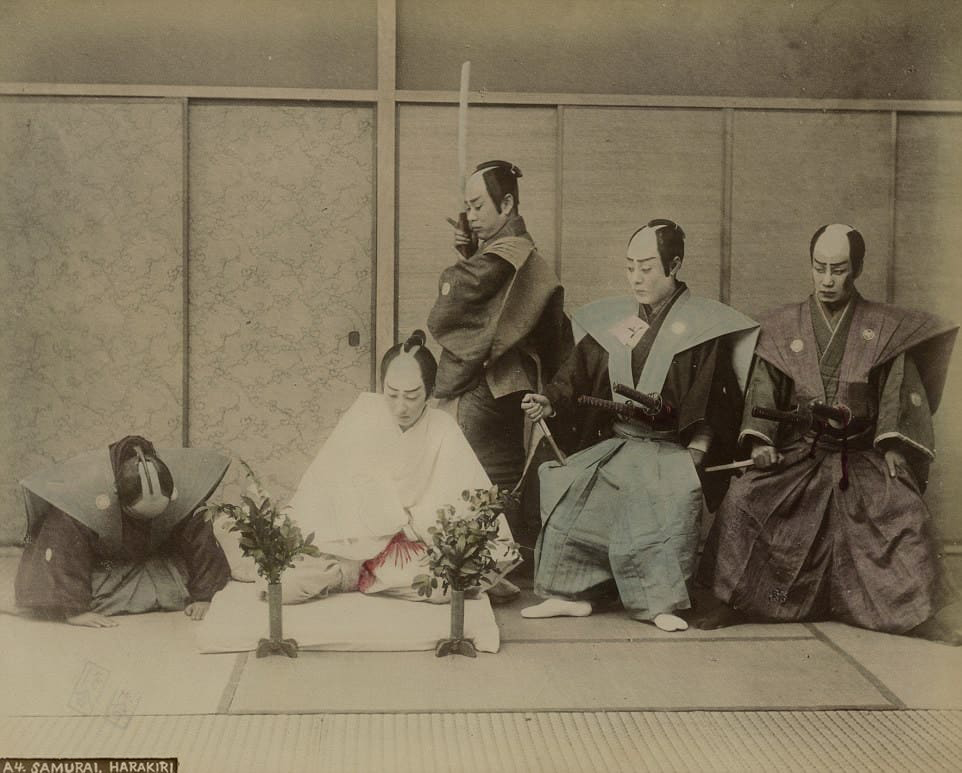
Image: Seppuku by Rev. R. B. Peery
Image above: Seppuku by Rev. R. B. Peery. Image in the Public domain via Wikimedia Commons.
"Now, if I’m sitting at the Board [of Directors] seat and I know that if I don’t do what my community tells me, my neck will be cut tomorrow morning, how will I really pay attention to the Public Interest?" - ICANN CEO Fadi Chehade explaining to the GAC on October 17, 2015, why the Membership Model doesn’t work for ICANN. See: GAC Oct 17: ICANN CEO, CCWG Co-Chair, Ships Passing in the Night?

First place runner-up 2015 Fadi quote:
My Transition from ICANN CEO, an Update: "I most recently accepted the invitation to co-chair a newly formed advisory committee to the World Internet Conference in Wuzhen ... To avoid any misunderstanding, I wish to confirm again that I have accepted this future role in my personal capacity." But read the press accounts:
Anonymous Hacks .... | Softpedia: "... [e]ven worse, at the same conference, ICANN (Internet Corporation for Assigned Names and Numbers), the organization that is in charge of managing domain names, has also pledged their support for a new plan for running the Internet, where Chinese figures have a more powerful word in the decisions taken by the organization. Since next year, ICANN will take over more IANA (Internet Assigned Numbers Authority) functions from the US government, this would give the Chinese government more power in how the global Internet is managed ...."
Second place runner-up 2015 Fadi quote:
“I'm not going to be steamrolled - ICANN CEO Fadi Chehade to CCWG Co-Chair Thomas Rickert in Los Angeles, September 26, 2015, in response to Rickert not allowing Chehade to show a slide indicating where the ICANN community had not reached consensus about CCWG's proposal for "enhancement of ICANN accountability." See: ICANN CEO Fadi Chehade "Steamrolled" by CCWG-Accountability Co-Chair.
Third place runner-up 2015 Fadi quote:
Fadi Chehade: "Shall I answer this in Arabic?" Initial response of ICANN CEO Fadi Chehade to question (in English) submitted by Editor of Domain Mondo at the ICANN 54 Open Forum, after Chehade was directed to answer the question by ICANN Board Member Erika Mann (after consulting with the Board). See: ICANN 54 Public Forum Video, Q&A, ICANN, INTA, IANA, Lobbyists. Note: Fadi still has not followed-up and provided an answer to the question as he promised to do on October 22, 2015. Surprised?

Fourth place runner-up 2015 Fadi quote:
Fadi Chehade: "This is an important point because there's a definition of lobbyists but it's not people who influence outside of the U.S." 
Steve Crocker: Stop. Please stop.
Fadi Chehade: This is actually wrong.
Steve Crocker: Please stop. Thank you. See: ICANN Lobbying, Conflicts, Ethics, Transparency, Accountability, Disclosure (emphasis added)
Fifth place runner-up 2015 Fadi quote:
Fadi Chehade: "... I think Adrian [Kinderis], Kurt [Pritz], and others who know this idea of the DNA Association [DNA represents interests of the new gTLDs domain name industry] and started in some small meetings we were having at the ICANN office where I was a huge early supporter, and continued to be ... there's a brewing issue for example coming up that will affect your industry ... I'm committed to your industry without a question. I need to understand it more and spend more time in it, no question. I did realize at some point that ICANN itself is an organization needs a dedicated president that is focused on serving the industry. I asked Akram [Atallah] to abandon his COO role and be the president [of ICANN's Global Domains Division (GDD)]. We created this division to serve you. In many ways we need to pair GDD and DNA and make sure that that is very tight ..."--ICANN President and CEO Fadi Chehade, transcript of DNA meeting, February 10, 2015, video of meeting here (emphasis and links added). See also: Why Did ICANN Become a Member of Trademark Lobbyist Group INTA? (emphasis added)
See also on Domain Mondo: a special collection of posts--"Remembering Fadi" and

After Wuzhen, Should ICANN President & CEO Fadi Chehade Be Fired?


DISCLAIMER

2015-10-21

The Guy Who Should Be Running ICANN, and CCWG-Accountability!

Every once in a while, if you listen closely, there is actually someone in an ICANN meeting who says something that makes sense, that is not just self-promoting hot air, posturing, selling, or lobbying. Such a rare event occurred Monday, October 19, 2015, during the CCWG-Accountability (Cross-Community Working Group on Enhancing ICANN Accountability) public engagement session during the ICANN 54 meeting in Dublin, Ireland:

"Bertrand de La Chapelle for the record.

"I want to continue briefly on what I said this morning, and I want in advance to apologize. I know it is difficult to come in at a late stage in the process. I understand there has been a lot of discussions, but I may be like a few other people here, somebody who knows about the internal functioning of ICANN but has not necessarily dedicated a lot of time following the work. So bear with me for just one second.

"My concern with the way it is presented today is that the conditions under which the recalling or the removal of one particular [ICANN] Board Member is envisaged in my view should be for failing to fulfill the responsibilities as a Board Member. That includes a nonexhaustive list--Conflict-of-interest issue, it can be a lack of fiduciary duty, it can be a behavior that has a particular--is an element of misbehavior.

"I do not think that not following whatever position an SO [Supporting Organization] may have on one topic is a misbehavior for an ICANN Board Member. This is not what I understand is the function of the [ICANN] Board.

"We collectively as a group and as a whole community create a body that is a collegial body, and I am concerned about the notion that somebody who has been elected by a particular constituency is entirely and exclusively representing the positions of this constituency. In a certain way, and I was making the comparison earlier today in a private conversation, this is one of the problems that we're witnessing in the European Union where governments are considering that their commissioner is there to represent their community. This is the European Union at the moment and I think this is a potential danger for ICANN.

"I think the Board Members should become extremely independent when they are designated and held accountable for that's misbehavior as a board member and not as the representative only of the community.

"I think if there is a list of explicit causes, whether you name it "causes" or not, it's okay, but if it is a completely open-ended thing, it is replacing accountability by oversight. And I do not think the community is above the Board. The Board is responsible to the community. That is different.

"And the final point is there are actually three elements that are slightly distinct and confused here. One is the responsibility of a Board Member towards the Community it comes from. The second is the responsibility of a Board Member to the organization. and the Third, which is always conflated with the second, and I think it's wrong, is the responsibility of the Board Member to the global public interest.

"There are situations where the duty of a board member, in my view, and I agree that not everybody may share that, the duty of a board member is to think about the global public interest first, the interest of the community -- of the corporation second, and the fulfillment of the coordination with its originating constituency [third]. but it [the global public interest] is a higher task, and it's a higher calling than just carrying whatever position their community may have at one point."

>>Thomas Rickert: thanks, Bertrand.

[applause ] (emphasis and link added)

@bdelachapelle - Diplomat, entrepreneur and multi-stakeholder activist. Director, Internet & Jurisdiction Project. Former Director on the Board of ICANN.


DISCLAIMER

ICANN 54 full schedule links, info, and twitter feeds here
See also:  ICANN 54, Dublin, Wednesday, Livestreams, LIVE and Replay Videos

2015-09-24

China (CAICT) Objects to ICANN CCWG Accountability 2nd Draft Proposal

Fiduciary Duty"Definition: A fiduciary duty is a legal duty to act solely in another party's interests. Parties owing this duty are called fiduciaries. The individuals to whom they owe a duty are called principals. Fiduciaries may not profit from their relationship with their principals unless they have the principals' express informed consent. They also have a duty to avoid any conflicts of interest between themselves and their principals or between their principals and the fiduciaries' other clients. A fiduciary duty is the strictest duty of care recognized by the US legal system. Examples of fiduciary relationships include those between a lawyer and her client, a guardian and her ward, and a director and her shareholders." -- Legal Information Institute (link above) (emphasis added)
UPDATE September 24, 2015: CCWG-Accountability "On the Way to LA" to hijack the Global DNS from the Global Multistakeholder Community through their deceptively named CMSM or "Community Mechanism as Sole Member" Model which allows select groups of ICANN "stakeholders" to override ICANN Board decisions and disregard the ICANN Board's fiduciary duties to the global multistakeholder community including the Board's fiduciary duty to act in the global public interest at all times.

"... At least the USG (US government) offers some accountability. ICANN's primary active stakeholders are businesses making money off the DNS; most users are too busy elsewhere to pay much attention..."--comment of Esther Dyson, ICANN's founding Chairman, in The Guardian, Sept 22, 2015

"Sole Member given reserved power under Bylaws to override Board decision directly, regardless of Board fiduciary duties." - Legal counsel for CCWG-Accountability (pdf) opinion on CCWG 2nd draft

China's CAICT has joined others in objecting to the power grab by the "ICANN community stakeholders" a/k/a ICANN insiders to the exclusion of the "global Internet community" in the most recent CCWG-Accountability 2nd Draft Report (pdf) which proposed a Single or "Sole Member" Model (comprised by only select ICANN stakeholder groups) to be "on top" over the ICANN Board of Directors and control ICANN, said Sole Member having no accountability to the global Internet community nor fiduciary duty to act in the global public interest--in fact one leading member of the CCWG has responded to an ICANN Board Member on the CCWG mail list and noted that with the "Sole Member Model" the ICANN Board will no longer have to worry about breaching "fiduciary duties" (to the global multistakeholder community a/k/a global internet communitye.g., or to act in the global public interest)--
"Members don't owe fiduciary duties generally speaking, just as the organisations that would comprise the member (the SOs and ACs) don't today. The [ICANN] Board's members do. The existence of a membership system modifies those duties for Board members - they do not breach fiduciary duties in implementing a decision a member has made. This could be a rabbit hole but the point is that the member option has more flexibility in determining matters and does not create impossibilities for the Board where it does so. That's a design feature of the choice of membership." -- Jordan Carter, CCWG-Accountability member (emphasis added)
Rabbit hole? "Down the rabbit hole" - a metaphor for an entry into the unknown, the disorientating or the mentally deranging, from its use in Alice's Adventures in Wonderland. source: Rabbit hole - Wikipedia

Meanwhile, China's CAICT has joined with others and objects to the CCWG's 2nd Draft Report--
"... We believe, in designing a voting system, the most important element that need to be considered is the representation of the global Internet community, instead of the representation of the ICANN community. Therefore, geographical balance should be an important element in terms of allocating the votes in the community; users' representation and the interests of developing countries should be properly considered too. For instance, Internet users in Asia exceed 1.4 billion, accounting for 45% of the world users. If there's no votes or extremely limited votes for Asian representatives, then this voting system is not appropriate..." -- Comment (pdf) submitted by China Academy of Information and Communication Technology (CAICT), September, 2015, Beijing, China, in response to CCWG-Accountability's 2nd Draft Report (emphasis added)

The above echoes other comments made, including the following submitted to the ICG mail list by Richard Hill on September 20, 2015:
Dear ICG,
A portion of the work of CCWG-Accountability is directly related to the transition proposal that you are coordinating. CWG-Accountability does not have, as far as I know, a public comments forum
such as the this one, and it does not accept comments from the general public, so I'm posting this message here and requesting that it be forwarded to CWG-Accountability. I refer to the draft summary of comments on the CWG-Accountability proposal published at: http://mm.icann.org/pipermail/accountability-cross-community/attachments/20150915/8167a9d5/2nd-draft-CCWGtrends-v4-0001.pdf
I detail below my concerns.
1. Who are the stakeholders? [in other words, the Global Multistakeholder Community or just certain "ICANN stakeholders"?]
Slide 2 of the PDR referenced above presents a "Stakeholder Distribution of Comments Received". The identified categories of stakeholders are:
* Governments
* ccTLDs
* Advisors to the CCWG-Accountability
* Chartering Organizations
* CWG-Stewardship
* Technical Community
Does this imply that individuals and civil society organizations are not stakeholders? Does this imply that comments from individuals and civil society organizations were not considered?
2. Misleading statistics
Slides 8 ff. of the PDF present breakdowns of responses. For example, it is stated that 27 responses agreed that the CCWG-Accountability proposal enhances ICANN's accountability while 61 did not provide an answer. It may be correct that 61comments did not explicitly answer that question, but at least six responses did answer it negatively, albeit implicitly ... The statistics presented are misleading because they imply that "did not provide answer" implies support for the proposal, which is not necessarily the case ..."

Domain Mondo has previously noted the CCWG-Accountability publishing misleading representations of the public comments received to the 2nd Draft Report. The CCWG-Accountability is scheduled to meet with members of the ICANN Board this Friday and Saturday. Maybe the ICANN Board of Directors can at least do something about the CCWG leadership publishing "misleading statistics." The CCWG-Accountability is looking more and more like an "insider deal" favoring the vested self-interested special interests ("ICANN stakeholders" or "lobbyists") who have always wanted to totally control and financially benefit from ICANN policy-making, to the exclusion of "outsiders" (a/k/a global multistakeholder community or "global Internet community") and to the detriment of the "global public interest." With US (NTIA) stewardship in place, the lobbyists could never totally control ICANN--now is their chance.

See also on Domain Mondo:


DISCLAIMER

2015-07-24

Enhancing ICANN Accountability, Public Comments Start July 31

Below is the Paris Communiqué issued by ICANN's CCWG-Accountability following its recent face to face meeting in Paris. As stated below, the public comment period on the CCWG's 2nd draft proposal is expected to be open from July 31-September 8, 2015. All issues open for public comment can be accessed on the ICANN website.

Cross Community Working Group on Enhancing ICANN Accountability (CCWG-Accountability) Paris Communiqué (July 20, 2015):

Members and participants of the Cross Community Working Group on Enhancing ICANN Accountability (CCWG-Accountability) met in Paris, France, from 17-18 July 2015. The event served as an opportunity to further advance the discussion on key outstanding issues and to reach agreement on next steps towards finalizing its Work Stream 1 recommendations.

This gathering comes on the heels of ICANN53 in Buenos Aires, as well as a series of prior discussions and feedback in response to the public comment period of the group's draft report.

The meeting had strong community participation, with 76 group members and participants attending in person and an additional 30 joining remotely. Further, several members of the ICANN Board of Directors, Governmental Advisory Committee (GAC) representatives, external Advisors and local stakeholders were also present (list of all participants).

Key issues
discussed and agreed-upon next steps are outlined below:

Community Empowerment Models
Following close examination and a series of dialogues and exchanges on the merits and drawbacks of the three (3) community empowerment models presented, the group agreed to advance the Community Mechanism as Sole Member Model (CMSM) as part of Work Stream 1, noting the momentum that emerged among the members of the CCWG-Accountability in support of this model.

Under this framework, the Supporting Organizations (SOs) and Advisory Committees (ACs) would collectively participate together as the sole member of ICANN. This coordination of SOs and ACs would be empowered to take certain special actions within ICANN. Further, an exchange of views will occur with the community before decisions are made. Additional details will become available over the next few weeks as the community continues to develop the framework for this model. The 'Empowered SO/AC Designator' and 'Empowered SO/AC Membership' models were also discussed and considered. Brief descriptions of each of these models can be found here [PDF, 564 KB].

Review of Government Inputs/Concerns Received
31 GAC members submitted individual contributions to the CCWG-Accountability ahead of the Paris meeting. The contributions addressed a series of questions aimed at further clarifying the positions ofGAC members with regard to their vision of the role of governments in a post-transition environment.

While in Paris, discussions focused on identifying requirements such as the role of governments with regards to public policy and assuring that the ICANN Board of Directors does not act outside of ICANN's mission. The group also acknowledged the challenges for governments to make certain decisions regarding their participation into the new community model in time for ICANN54 in Dublin.

Dependencies between the CWG-Stewardship and CCWG-Accountability
CWG-Stewardship co-Chair, Lise Fuhr, articulated the conditionalities and dependencies between the naming community proposal and the work of the CCWG-Accountability. These dependencies fall under 6 areas:
  1. ICANN Budget: Community rights regarding development and consideration
  2. ICANN Board: Community rights, specifically to appoint/remove members, recall the entire Board
  3. IANA Function Review: Incorporated into the bylaws
  4. Customer Standing Committee: Incorporated into the bylaws
  5. Appeals Mechanism: Independent Review Panel should be made applicable to IANA Functions and accessible by TLD managers
  6. Fundamental bylaws: All foregoing mechanisms are to be provided for in the bylaws as "Fundamental bylaws"
The group agreed to continue coordinating their activities with the CWG-Stewardship in an effort to ensure that the recommendations put forth by the CCWG-Accountability fully meet the requirements [PDF, 1.4 MB] (p. 20-21) of the naming community.

Refinements of Independent Review Process (IRP)
The group reached broad agreement on elements of the enhanced IRP, including diversity as a guideline for conformation and community-driven panel selection processes. Additionally, a subgroup will be formed to further develop IRP rules and procedures as well as fine tune the subject matter for IRP.

Next Steps
Over the coming days, the group faces the challenge of addressing all outstanding issues and compiling a complete 2nd Draft Proposal for a 40-day public comment from 31 July until 23:59 UTC on 8 September 2015. It is important to note that this public comment period will directly parallel the public comment on the Interim Final Transition Proposal being assembled by the IANA Stewardship Transition Coordination Group (ICG).

The first public comment included over 60 submissions that the CCWG-Accountability is carefully considering. Comments were helpful in preparing for the Paris meeting and are being considered in developing the 2nd Draft Proposal. Responses to these comments will be published along with references to the 2nd Draft Proposal to acknowledge substantive changes where applicable.

The CCWG-Accountability aims to have a Work Stream 1 proposal finalized and distributed to its chartering organizations prior to ICANN54 in Dublin. [ICANN 54 - October, 2015]. Based on the current work plan, the group confirms its plans aiming at delivering the Work Stream 1 proposal to the U.S. National Telecommunications Information Administration (NTIA), by late October or early November.

More information: ICANN CCWG-Accountability website
(source: ICANN)


Domain Mondo archive